I feel for today’s technology buyer. Every software company is now an “AI company” if you believe their marketing. Unfortunately, the sophistication of how AI is deployed from one software company to the next varies wildly. Great AI solves important problems efficiently and consistently and does so in a way you can trust. Fundamentally, “Great AI” exists at companies that invest in the most qualified teams of deeply knowledgeable AI engineers and product leaders and don’t just co-opt regular software engineers to build and integrate AI features. Raintree’s strategic approach has been an unrelenting focus on assembling the most qualified and experienced AI team in the healthcare industry. Hiring AI experts who are advanced enough to work at companies like Anthropic, OpenAI, or Meta is hard and expensive, but this is the standard we have set for ourselves.
Raintree now has a sizable team of master’s and doctoral recipients in Artificial Intelligence and Machine Learning from the world’s leading institutions and companies, including Cambridge, Cornell, Oxford, Meta, etc. One of the intentional by-products of assembling this team and having them work on genuinely profound problems and opportunities for our customers is that they are producing important breakthroughs in the state of the art in Artificial Intelligence more broadly.
One such example is a recent paper published in the AI industry’s leading research journal “NeurIPS”. This is the same organization that first published Google’s paper that invented Transformer technology, the most fundamental advancement in AI that has made every breakthrough since 2019 possible. ChatGPT or Claude would not exist today without it.
The Research in Brief
Augustas Mačijauskas, a Senior AI Engineer on our Agentic AI team, co-authored “Capability-Gated Language Models: Security Composes, Utility Does Not” with Patrikas Vanagas and Laurynas Lopata. It was accepted at the Foundations of Language Model Security workshop at NeurIPS 2026.
The paper asks whether a single AI model can hold different “permission levels” for different users inside the model itself, rather than relying on separate models or outside filters. The answer is yes, with an important twist:
- Security stacks well. Layering restrictions tends to keep the model safe, and sometimes makes it safer.
- Usefulness doesn’t. Two restrictions that are harmless on their own can, combined, make the model worse at everyday tasks, and there’s no general way to rule that out in advance.
The lesson: you can’t bolt rules onto AI and assume it still does its job. You have to measure it. The authors are clear that this is early work, tested on smaller models and benchmarks, and that kind of rigor is exactly what we want from the people building our technology.
Why it Matters for Rehab Therapy
One system, many users, each with different permissions, all needing AI that’s safe and useful. That’s every rehab therapy practice.
Your front desk, billing team, therapists, clinic directors and patients all need different levels of access. AI that serves them has to respect those boundaries without becoming clumsy, and in healthcare, with patient data and payer rules on the line, there’s no room for error.
As we scale our agents across Agentic RCM and Agentic PX, including Lucy and Marcy, our engineers build around three questions:
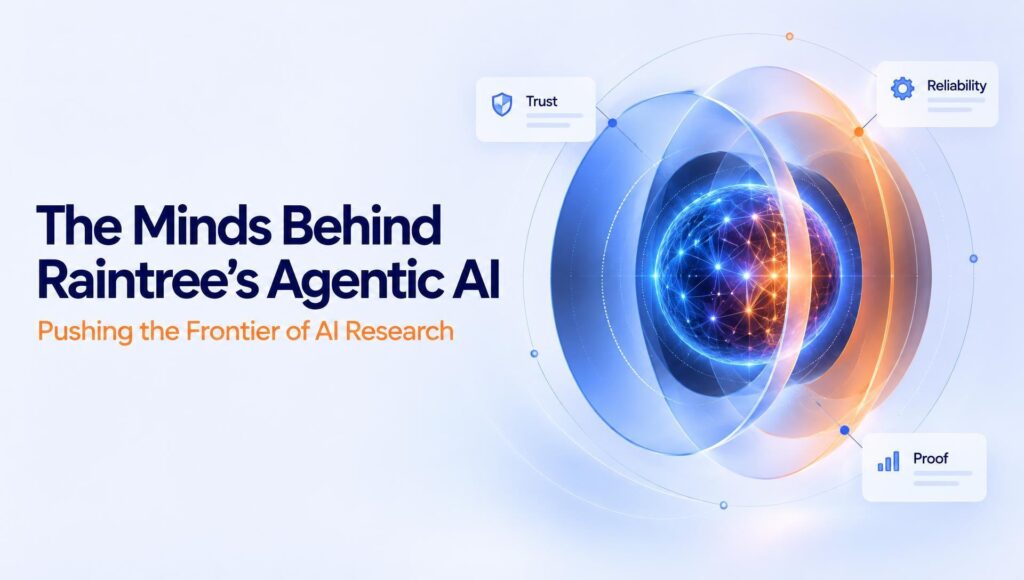
- Trust: Does each agent do only what it should, for the person it’s working for?
- Reliability: Do our safeguards leave the agent fully capable of doing the job?
- Proof: Can we show it with real measurement, not assumptions?
Where Next?
Congratulations to Augustas on his first published paper, earned while working full-time for Raintree. We are proud to be advancing the Artificial Intelligence industry. More importantly, we believe we remain in a unique position to deliver breakthrough capabilities to our clients as we work with them to transform the industry. We look forward to many more celebrations in the future.