

The way a product is built matters just as much as the problems it solves. In the product design process, decisions made early on shape everything that follows: usability, adoption, and long-term value.
Here at Raintree, product innovation is guided by a disciplined approach to research that blends market context, observation, and feedback from real users, helping ensure innovation remains both responsive and principled as therapy organizations navigate increasing operational complexity and regulatory change.
Innovation Built on Alignment
In many therapy organizations, progress depends on alignment across clinicians, front office staff, and leadership. Product innovation requires the same level of coordination to move forward without friction.
This means tightly aligning research, UX design, product management, and engineering around a shared understanding of client and market needs. Through this alignment, user experience insights inform decisions throughout the product lifecycle from early discovery and concept development through validation, refinement, and release.
What further distinguishes our approach is the active involvement of internal subject matter experts from client-facing teams, who bring firsthand knowledge of how our clients operate day to day. This additional layer of validation and context—based in ongoing client relationships—helps to ensure that insights are not only well-researched, but also deeply connected to how our products are experienced in practice.
Product Decisions Informed by Context and Evidence
Product decisions are strongest when they reflect multiple dimensions of insight. Our approach intentionally brings together several complementary inputs, including direct user research, behavioral and workflow analytics, industry and regulatory context, emerging technologies, and broader market intelligence.
Together, these perspectives create a clear, contextual understanding of where innovation will deliver the greatest value, both now and in the future.
To support this work at scale, we leverage an AI-enabled operational model that accelerates insights and feedback cycles. This allows for faster learning while preserving the depth and nuance required for human-centered design.
Related Content:
- Raintree User Experience: The New Standard All Other EMRs Will Strive For
- Raintree’s Product Evolution: Leveraging Experience to Accelerate Innovation and Adoption
- 5 Weeks to Go-Live: How Raintree’s Success Blueprint™ Redefines EMR Implementation
- Physical Rehabilitation Network Uses Raintree for Clinical Documentation Solution
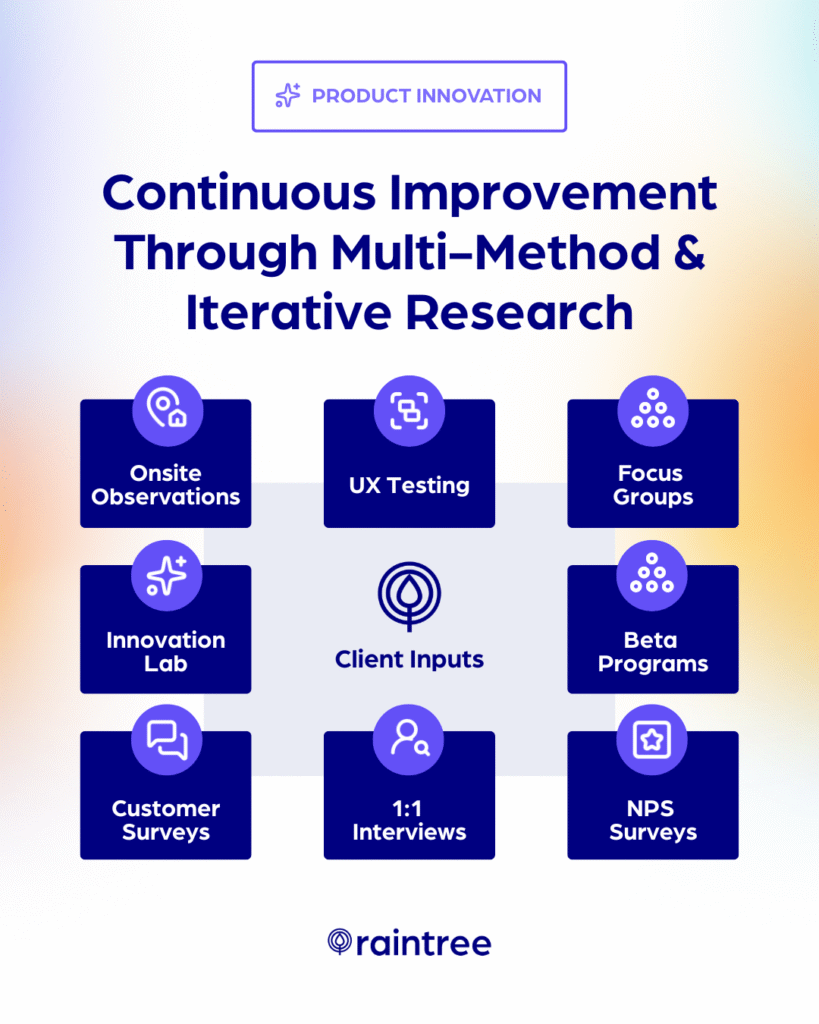
How Multi-Method, Iterative User Research Shapes Product Evolution
User research takes different forms depending on what question we’re trying to answer. Rather than relying on a single research format or cadence, we select research methods based on the objective at hand, the insights required, and the speed at which we need to learn.
This flexibility allows us to move with purpose. By matching the research method to the moment, we’re able to reach meaningful insight faster while making the most of our participants’ time and input. This also helps us bring in the right voices at the right time, rooting our decision-making in role-specific feedback.
Within this framework, we rely on three primary feedback channels. Each serves a distinct role in supporting the speed and depth of our research:
1. Structured, Research-Driven Feedback
Structured research includes surveys, focus groups, Net Promoter Score (NPS) studies, prototype testing, and beta programs. These efforts are aligned to defined research themes and product roadmap priorities established in response to client feedback, ensuring focus on the workflows and challenges with the highest potential impact.
In 2025, our new approach to structured research offered more opportunities for client participation across various methods, including our hands-on Innovation Lab at TherapyCon and the APTA Private Practice Conference. Together, these efforts culminated in over 150 hours of research and participation from a broader range of user personas.
2. In-the-Moment Workflow Feedback
Some insight is most valuable when captured in context. In-the-moment feedback is gathered as users interact with our products through mechanisms such as product usage analytics and in-app feedback. This real-time signal highlights how workflows perform in practice and where incremental improvements can make a meaningful difference.
This is a critical component of sustained product innovation. This creates a continuous quality loop that allows teams to monitor usability and adoption patterns, validate the impact of changes, and refine workflows with precision and speed.
3. Onsite Observational Research
Onsite observational research allows our team to spend time in real work environments, observing how staff interact with our products within their daily routines.
These sessions reveal nuances that are difficult to capture through surveys or interviews alone. By engaging in observational research, organizations help surface workflow complexity and adaptations, subtle friction points and inefficiencies, and opportunities for more holistic design improvements. Observational research often informs broader innovation opportunities and longer-term evolution.
Designing for Innovation and Emerging Possibilities
At Raintree, user feedback is deeply embedded not just in how our platform improves, but how we approach innovation overall—because many of the most important product decisions are made before a need is clearly articulated.
By continuously learning from research, behavior, and real-world context, product teams gain the ability to recognize patterns early and respond with intention. This is where feedback moves from validation to foresight. It enables design and product decisions that prepare organizations not only for how work is done today, but for how it is likely to evolve.
This product research approach—grounded in evidence, context, and partnership with our users—enables us to rapidly innovate and evolve alongside the practices that rely on Raintree as their foundation for growth.

About the Author
Kayla MacNeil is the Director of User Experience Design at Raintree, bringing over ten years of experience in building high-impact Research and Design teams. Prior to joining Raintree, Kayla led Research and Design at Nextech Systems and served as a shared resource leader at Therapy Brands, where she managed design strategy across a portfolio of 18 brands. Her career is rooted in a passion for creating intuitive, engaging user experiences that serve as a key differentiator in the healthcare technology space.